Monday, June 15, 2026·2026 Edition
AboutMethodologyContact
The TakeHomeTax
Home/Calculators/Paycheck Calculators
Paycheck Calculators

Marriage Tax Calculator

Find out if getting married will save or cost you money on taxes. Compare filing as two singles versus married filing jointly.

By NumbersLab Editorial·Updated for 2026 tax year·Editorial standards
Wedding rings — representing the marriage tax bonus or penalty calculation for joint vs separate filing
Photo by Marc A. Sporys on Unsplash
Interactive Calculator

All inputs adjust the result in real time. No data leaves your browser.
Tax Year
$
$
Combined Income: $150,000
Marriage Tax Bonus
+$95You save by marrying
You save $95 per year filing jointly
Filing as Singles (Total)
$27,020
Combined tax burden
Filing Jointly
$26,925
Married joint tax
Difference
+$95
Combined Take-Home (Joint)
$123,075
As Two Singles
Spouse A Income$85,000
Spouse A Tax−$16,428
Spouse A Take-Home$68,573
Spouse B Income$65,000
Spouse B Tax−$10,593
Spouse B Take-Home$54,408
Combined Take-Home$122,980
Married Filing JointlyBetter
Combined Income$150,000
Federal Tax−$15,450
FICA−$11,475
Texas State Tax$0
Total Tax−$26,925
Combined Take-Home$123,075
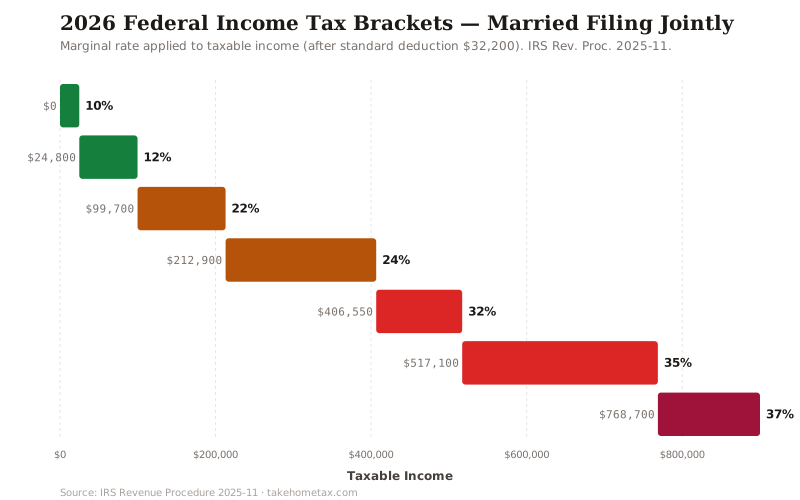
2026 federal income tax brackets for married filing jointly, showing marginal rates from 10% to 37%
Figure. Married filing jointly brackets are roughly double the single brackets at the lower end but compress at the top — the 37% bracket starts at $768,700 for MFJ vs $640,600 for single.Source: IRS Revenue Procedure 2025-11
The Background

The marriage bonus or penalty arises because federal tax brackets for married couples filing jointly are not always exactly double the single brackets. When two spouses earn similar incomes, their combined income can push them into higher brackets compared to filing separately -- resulting in a marriage penalty.

Conversely, when one spouse earns significantly more than the other, filing jointly often results in a marriage bonus. The higher earner benefits from the wider married brackets, while the lower earner's income fills the lower brackets.

This calculator compares the total tax burden if both partners filed as single versus the tax on their combined income filing jointly. The difference reveals whether marriage helps or hurts from a tax perspective.

Keep in mind that tax implications are just one factor. Marriage also affects estate planning, Social Security benefits, health insurance, and many other financial considerations. Consult a tax professional for personalized advice.

More in Paycheck Calculators
Browse all paycheck calculators
The Full Index
PaycheckFreelance TaxOvertime (OBBBA)Quarterly EstimatesBonus TaxW-4 WithholdingTax RefundStock OptionsRSU TaxSelf-EmploymentSide IncomeRetirementSalary → HourlyHourly → SalaryRelocationCost of LivingEmployer CostCapital Gains1099 vs W2Social SecurityPaycheck PlannerSalary NegotiationRetirement PlannerBracket VisualizerSide HustleTotal CompAMT TriggerCharitable GivingWithdrawal SequencerTrue Marginal RateTax Cliff MapRMD ForecasterSS Claiming AgeLump Sum vs AnnuityInherited IRARMDInflation SalaryRoth vs Traditional 401kHSA Triple-Tax401(k)
Was this calculator helpful?
The Take-Home Tax Guide
Weekly tips on reducing your tax burden, state tax changes, and salary negotiation strategies. Free.